CROSS-BORDER INSOLVENCY DISPUTES

The UNCITRAL Model Law has been strongly recommended for providing a wide-ranging solution for resolving cross-border insolvency issues.

The UNCITRAL Model Law has been strongly recommended for providing a wide-ranging solution for resolving cross-border insolvency issues.
A recently evolved notion of co-relation of Principal amount and interest levied on it, for the purpose of Section 5(8) of the code and its implication in the application filed under Section 7.
The Corporate Debtor would carry on construction and out of total saleable construction 32% will be of landowner and remaining 68% will be of the Corporate Debtor.
The claims filed/to be submitted by the workers of the appellant must be decided upon and taken into consideration by the Liquidator even if RP has not submitted the claims towards the wages/salaries as part of CIRP costs.
Specifically in insolvency proceedings, mediation as a tool can be employed to resolve issues and clear the bottleneck in the resolution process which had led to delays.
The Pre-Packaged Insolvency Resolution Process (PPIRP) mechanism have helped the MSMEs to a great extent in order to revive their operations as a going concern.
The institution or continuation of a proceeding of dishonour of cheque against company under the provisions of Negotiable Instruments Act, 1888 fall within the ambit of moratorium provision of the IBC.
The Bangalore Sales Corporation v Sark Spice Products Pvt. Ltd., the National Company Law Tribunal (“NCLT”), Kochi Bench, comprised of Shri. P. Mohan Raj (Judicial Member) and Shri. Satya Ranjan Prasad (Technical Member), held that an unregistered Partnership Firm cannot institute insolvency proceedings under IBC.
the Insolvency Law Committee in 2020 constituted a sub-committee to study Pre-packaged Insolvency Resolution Process (PPIRP). On the basis of this subcommittee’s recommendations, the Insolvency and Bankruptcy Code was amended on 4/4/2021 through an ordinance to bring effect to this change.
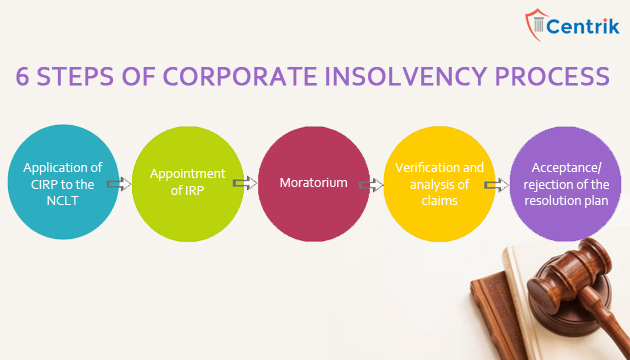
CIRP is a process to determine the capability of repayment of the defaulted corporate. For this purpose, IRPs are appointed. They evaluate the assets and liabilities to determine the capability of repayment.
Section 29A of the Insolvency and Bankruptcy Code has emerged as one of the key aspects in determining the Eligibility of the Potential Resolution Applicants in a tedious attempt to save the company in question under the Corporate Insolvency Resolution Process (CIRP).
The COVID-19 crisis has caused distress and failure in the MSME sector. The insolvency law since its enactment in 2016 has been amended several times in order to protect the interest of MSMEs as well as the future and growth of the Country.
A banker’s certificate is not mandatorily required for an operational creditor to begin Corporate Insolvency Resolution Process (CIRP) under section 9 of Insolvency and Bankruptcy Code, 2016.
The minimum threshold limit mentioned under section 4 of Insolvency and Bankruptcy Code, 2016 can include both principal and interest amount. The invoices/bills raised by the Operational Creditor clearly mentioned that the interest will be charged @18% after the due date of the bill.
the Yamuna Expressway Industrial Development Authority had cancelled the allotment of ‘Panorama’ in Sector 22A over non-payment of dues of Rs 46.8 crore.









 join For Updates